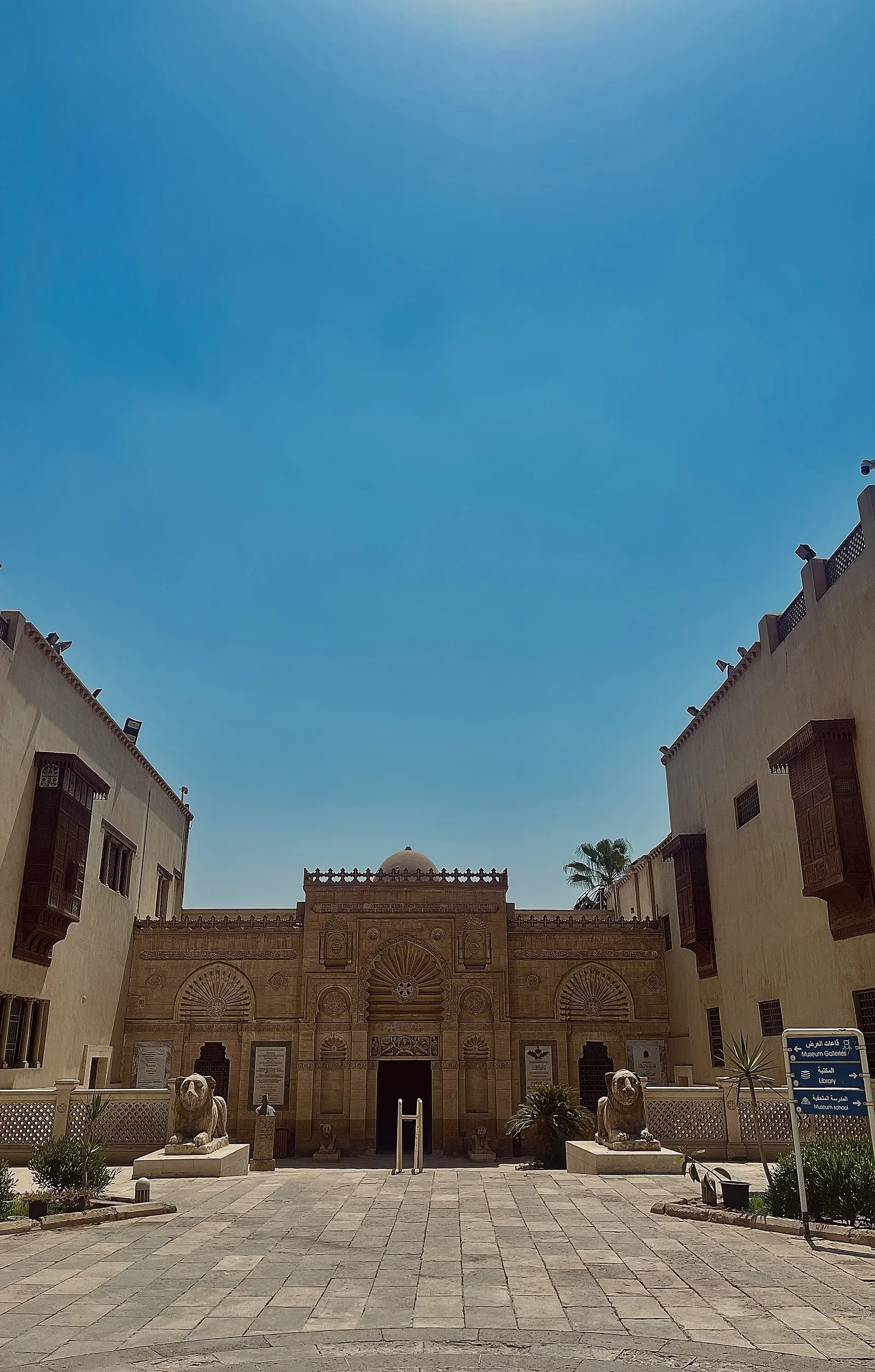
The museum record must distinguish three things that can look visually continuous: accessioned objects, reused historic architectural elements and later architecture inspired by historic forms.
FORMATION AND IDENTITY
Community initiative entered state administration.
The museum is closely associated with Marcus Simaika’s preservation work and Coptic communal institutions. Founded in 1908 and opened in 1910, it grew through donation, purchase and transfer. State administration from 1931 and later transfers from the Egyptian Museum changed its institutional framework.
This history makes ownership and provenance especially important. “From a church” should be narrowed to building, place, date and transfer circumstances wherever documentation permits.
MATERIAL SCOPE
Objects once belonged to larger settings.
Carved wood, stone capitals, textiles, manuscripts, icons and metalwork often entered the collection after removal from architectural, liturgical or domestic contexts. Museum preservation secures material while changing its relationships of use, sound, height and movement.
DISPLAY AND RESEARCH USE
The building participates in classification.
Courtyards, mashrabiyya, ceilings and decorative details create an environment of cultural continuity. Researchers should ask which features are original, reused or revival, and how architecture shapes the interpretation of collection objects.
- Which accession routes involved churches or monasteries?
- How are original architectural contexts documented?
- Where do language and motif cross period boundaries?
- How did state administration alter the collection?
LIVE FIELDS
Museum and district access are separate.
Current rooms, photography, step-free routes and entrance conditions require museum confirmation. Nearby worship sites have independent schedules and rules and should not be folded into this institutional record.
Source path
Use the museum’s catalogues, scholarship on Marcus Simaika and Coptic heritage, object provenance records and architectural studies of the complex.