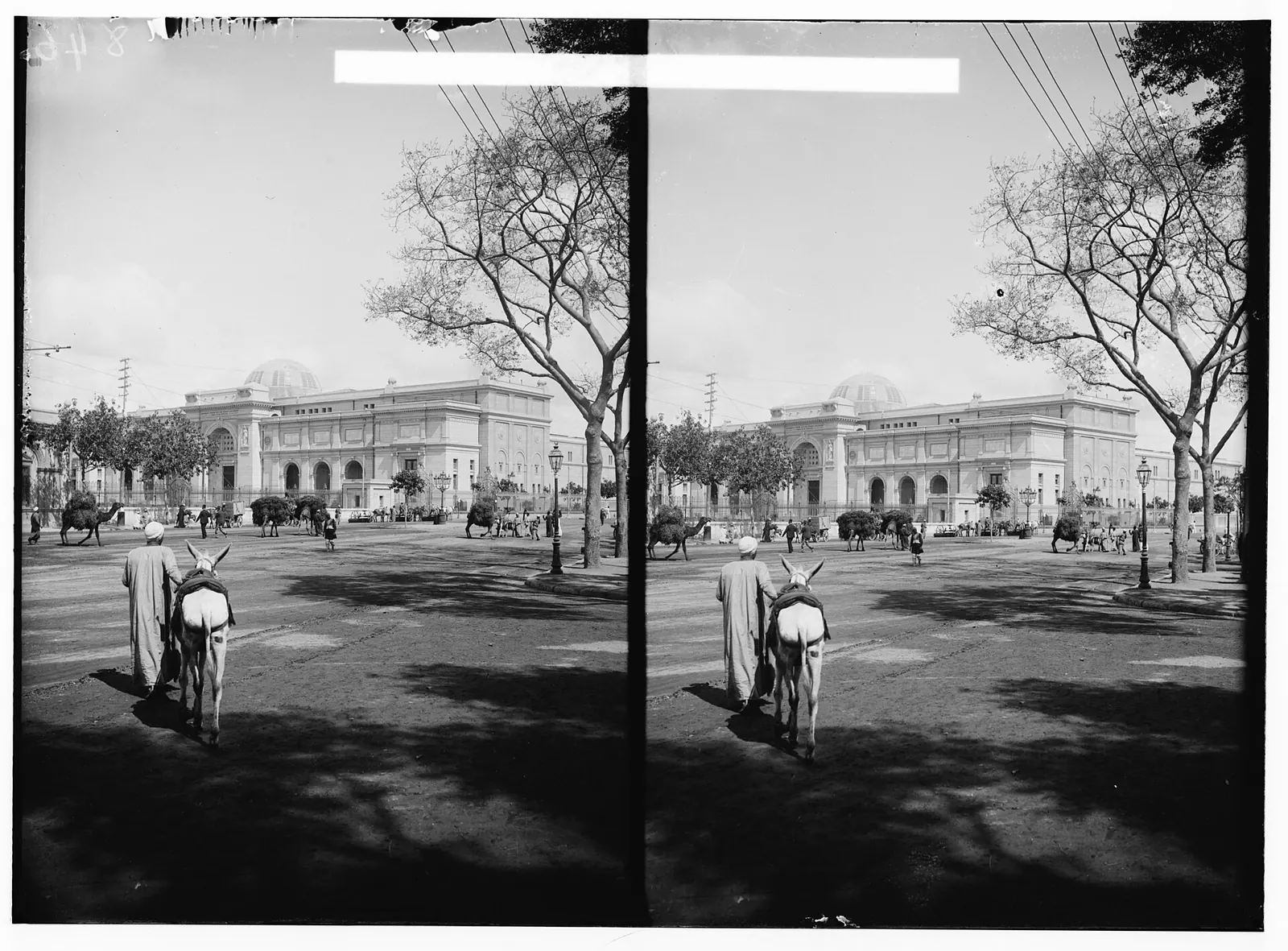
The Tahrir museum is simultaneously a major ancient-Egyptian collection and evidence of how archaeology was ordered, displayed and institutionalized across more than a century.
INSTITUTIONAL FORMATION
The collection predates the building.
The institution’s antecedents include the Antiquities Service museum at Boulaq and the later Giza Palace location. The 1902 building gave expanding collections a purpose-built central Cairo home. Its atrium, upper galleries and long cases materialized an early twentieth-century system of archaeological order.
Later excavations, cataloguing, storage changes and redisplay altered that system without erasing it. Visitors encounter several periods of museum practice at once.
COLLECTION MOVEMENT
Departure is part of the profile.
Transfers to the Grand Egyptian Museum and the National Museum of Egyptian Civilization changed what is publicly associated with Tahrir. A famous object’s historical link to this museum does not prove its current location.
The record should therefore distinguish “formerly displayed,” “held by,” “transferred to” and “currently on view.” Each describes a different institutional relationship.
DISPLAY AND RESEARCH USE
Density enables comparison.
Closely grouped objects support typological study: changes in vessel form, coffin decoration, pose, material or inscription can be compared within a short distance. Density also increases cognitive load and can obscure individual provenance.
- Which groupings reflect period, site or older curatorial practice?
- How do historic cases influence perceived categories?
- Which records retain Boulaq or Giza collection histories?
- How are transfers documented across institutions?
LIVE FIELDS
Current display is not the historic inventory.
Active galleries, object locations, access routes, camera rules and hours require verification. The historic building also makes specific accessibility questions more useful than general assumptions.
Source path
Use the museum’s institutional history and catalogue, Antiquities Service scholarship, historic plans and the receiving institutions’ transfer records.