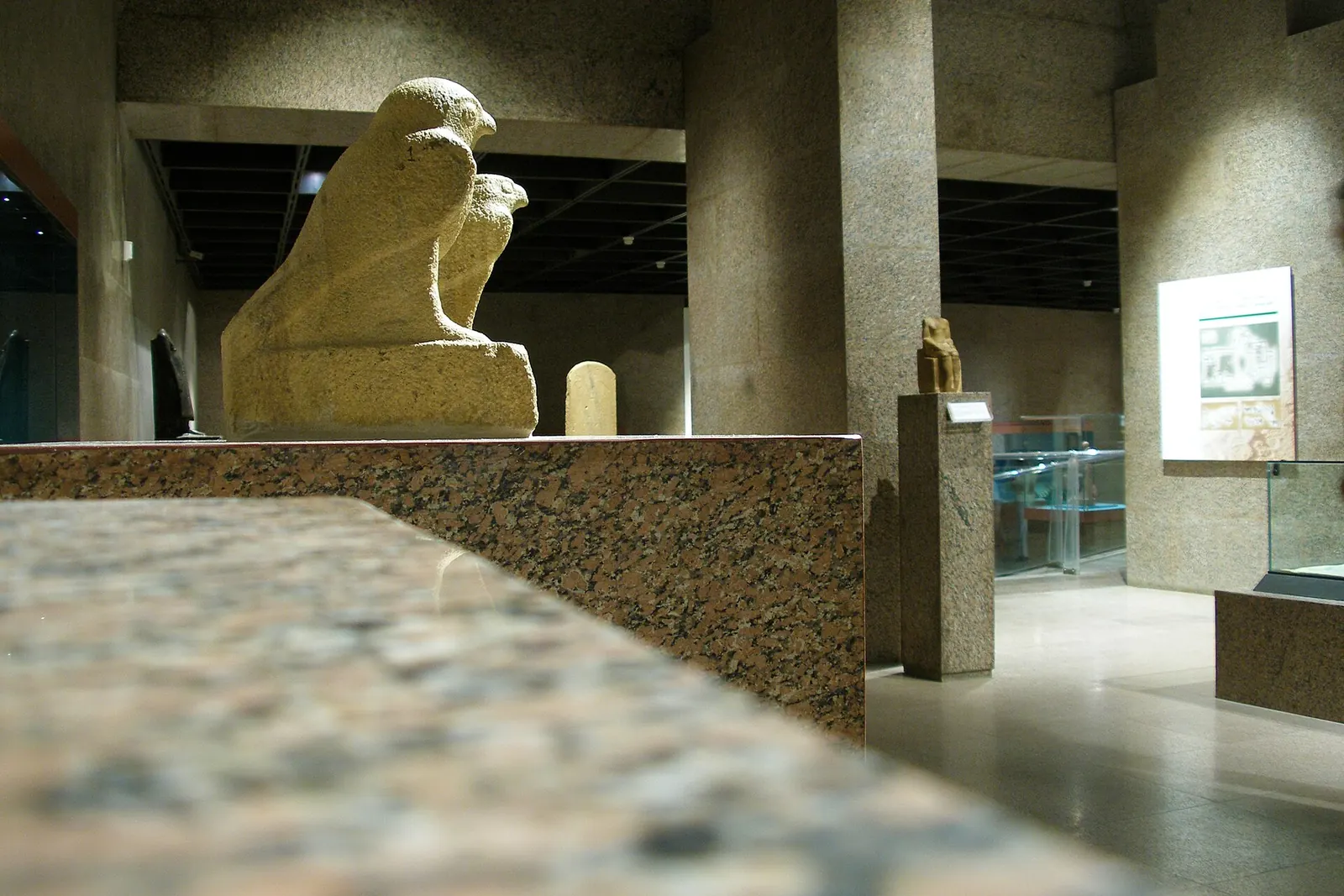
The record cannot be contained by Egypt’s modern southern border: Nubian history extends through southern Egypt and northern Sudan, while the museum itself is a national institution in Aswan.
FORMATION AND LANDSCAPE
Rescue produced collections and absences.
UNESCO’s international Nubian campaign generated excavation archives, documented sites and relocated monuments during the transformation caused by the Aswan High Dam. It also belongs to a history of Nubian displacement and submerged inhabited landscapes.
The museum project created a regional home for material and memory. Architecture and gardens respond to Aswan’s granite environment without reproducing the lost landscape.
SCOPE AND CLASSIFICATION
Archaeology meets living heritage.
The collection crosses archaeological cultures, kingdoms, Christian and Islamic periods and recent community life. Models, photographs and archival records carry relationships that isolated objects cannot. Clothing, jewellery and domestic material expand the record beyond excavation.
DISPLAY AND RESEARCH USE
The border of the record is itself a question.
- How does the museum map Nubia across modern states?
- Which rescue records preserve original relationships?
- How are displacement and monument preservation balanced?
- Whose voices define recent cultural continuity?
The institution supports research into heritage rescue, regional identity, community representation and the limits of archaeological classification.
LIVE FIELDS
Landscape access changes.
Opening periods, garden routes, heat conditions, available languages, photography and step-free circulation require current confirmation. Outdoor access should be recorded separately from gallery access.
Source path
Use museum catalogues, UNESCO campaign records, excavation archives and scholarship or community histories addressing Nubian displacement and cultural continuity.