This entry treats the GEM as an institution and collection system—not simply a new building or a container for famous objects.
IDENTITY AND GEOGRAPHY
A museum positioned toward the plateau.
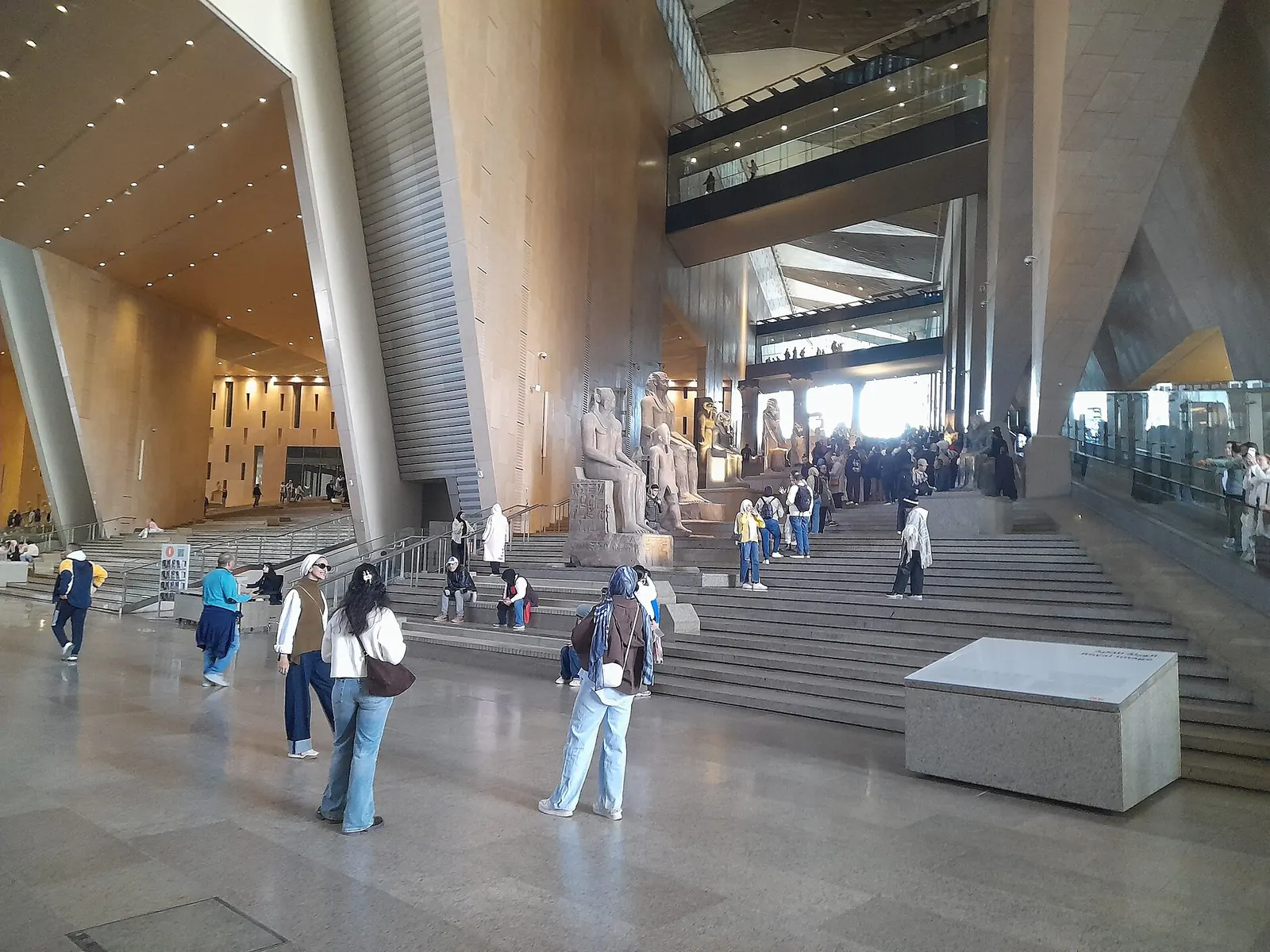
The museum occupies a site near the Giza plateau rather than central Cairo. Its architecture uses long axes, level change and broad interior volumes to establish a visual relationship with the pyramid landscape. The setting is interpretive: it connects a national collection to one exceptionally famous archaeological geography, even though the objects come from sites across Egypt.
Because it functions as a campus, arrival, conservation, storage, visitor circulation and public display operate at a scale different from older city museums.
COLLECTION FORMATION
Transfer is part of the record.
The GEM collection was assembled substantially through transfers from existing Egyptian institutions and stores, not through one founding excavation. Objects associated with Tutankhamun form a prominent group, while monumental sculpture and chronological galleries create a broader survey.
Every transferred object has at least two modern locations: the previous institutional record and the present one. Researchers should retain earlier inventory references where catalogues provide them and distinguish physical move, administrative reassignment and public redisplay.
DISPLAY AND RESEARCH USE
Scale creates both access and hierarchy.
Monumental stairs and large volumes make relationships of size visible, while chronological organization supports period comparison. The same architecture can privilege royal and monumental material, so small tools, writing equipment and evidence of ordinary work require deliberate attention.
- How does the museum connect Giza to objects from elsewhere?
- Which earlier institutional numbers follow transferred works?
- How does conservation information enter public display?
- What becomes more or less visible at monumental scale?
LIVE FIELDS
Do not freeze operational data.
Opening periods, accessible routes, active galleries, object locations, photography rules and campus transport require direct confirmation. This record intentionally contains no ticket price or guaranteed highlight list.
Source path
Begin with the museum’s official site and collection material, then compare architectural competition records, conservation publications and the catalogues of institutions from which objects transferred.