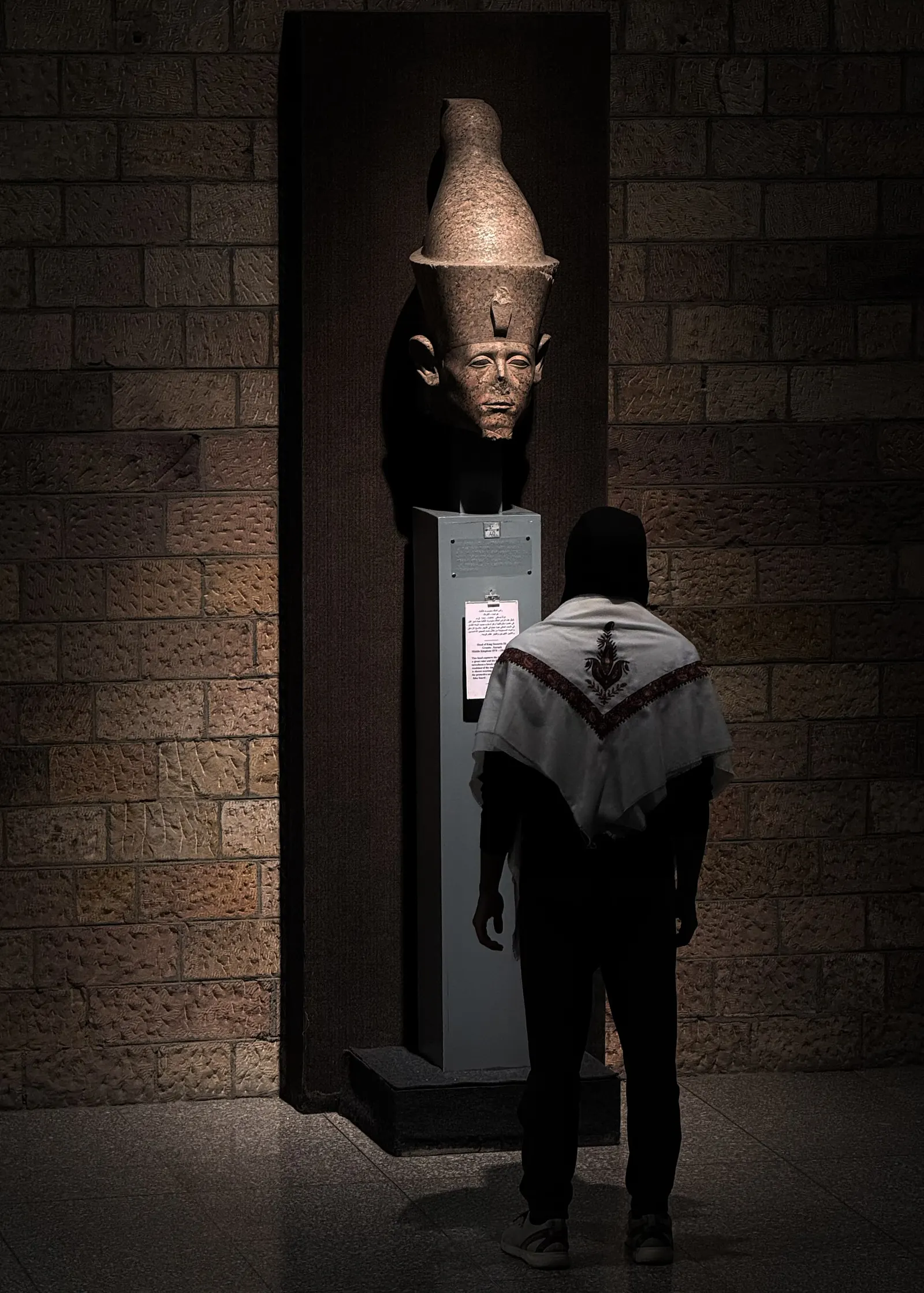
Luxor Museum’s profile is defined less by encyclopedic breadth than by selection, spacing and proximity to the sites from which much of its material derives.
REGIONAL IDENTITY
Near the sites, but not inside them.
The museum sits between major Theban monuments within the modern city and river landscape. Regional proximity supports interpretation, but the gallery remains a modern constructed context. “From Luxor” must be narrowed to temple, tomb, cache, excavation area or broader regional attribution.
The 1975 opening established an alternative to denser national collections: fewer objects, controlled light and stronger visual isolation.
COLLECTION FORMATION
Documented groups carry special weight.
Material from excavation and conservation in the region shaped the collection after opening. The statuary cache discovered at Luxor Temple in 1989 is important not only for individual sculpture but because the group’s find circumstances were documented.
New discoveries and gallery additions mean that the institution’s formation continues. Opening date is not the end of the collection biography.
DISPLAY AND RESEARCH USE
Spacing is a curatorial claim.
- How are documented Theban findspots made visible?
- Which royal or monumental objects dominate selection?
- How did the 1989 cache alter the institution?
- What histories are produced by controlled lighting?
The museum is a strong case for studying regional provenance and twentieth-century display modernism together.
LIVE FIELDS
Evening operation is seasonal data.
Opening periods, last admission, room access, camera rules and accessibility require current verification. Do not preserve an evening schedule as a permanent museum attribute.
Source path
Use museum catalogues, excavation reports for documented groups, regional archaeological publications and studies of the museum’s architecture and gallery development.